

Let the Chicken Train demo set the pace
Chicken Train demo play should answer one simple question: can you keep the same plan while the game moves? Start with a small virtual stake, repeat the same decision pattern and notice where you begin to chase the next result. The demo is free, but the habits it reveals are the same ones that can affect a paid session.
A useful practice run includes mistakes. Try cashing out too early, waiting too long and pausing after a loss. Then decide which version felt easiest to repeat calmly. Demo outcomes are not a forecast, so the virtual balance matters less than your response to swings. If you later deposit, keep the first session close to the plan that survived practice.
If the demo makes you impatient, more practice is better than a faster deposit.
Keep one note after each sample: what you planned, what you changed and why. That makes the demo a learning tool instead of random clicking.
Play Chicken Train Demo — No Registration Required
The demo below runs the exact same game engine as the real-money version. Same 97% RTP, same 4 risk levels, same Bonus Run feature. The only difference: you play with virtual currency, so there's zero financial risk. Your virtual balance resets automatically if it runs out.
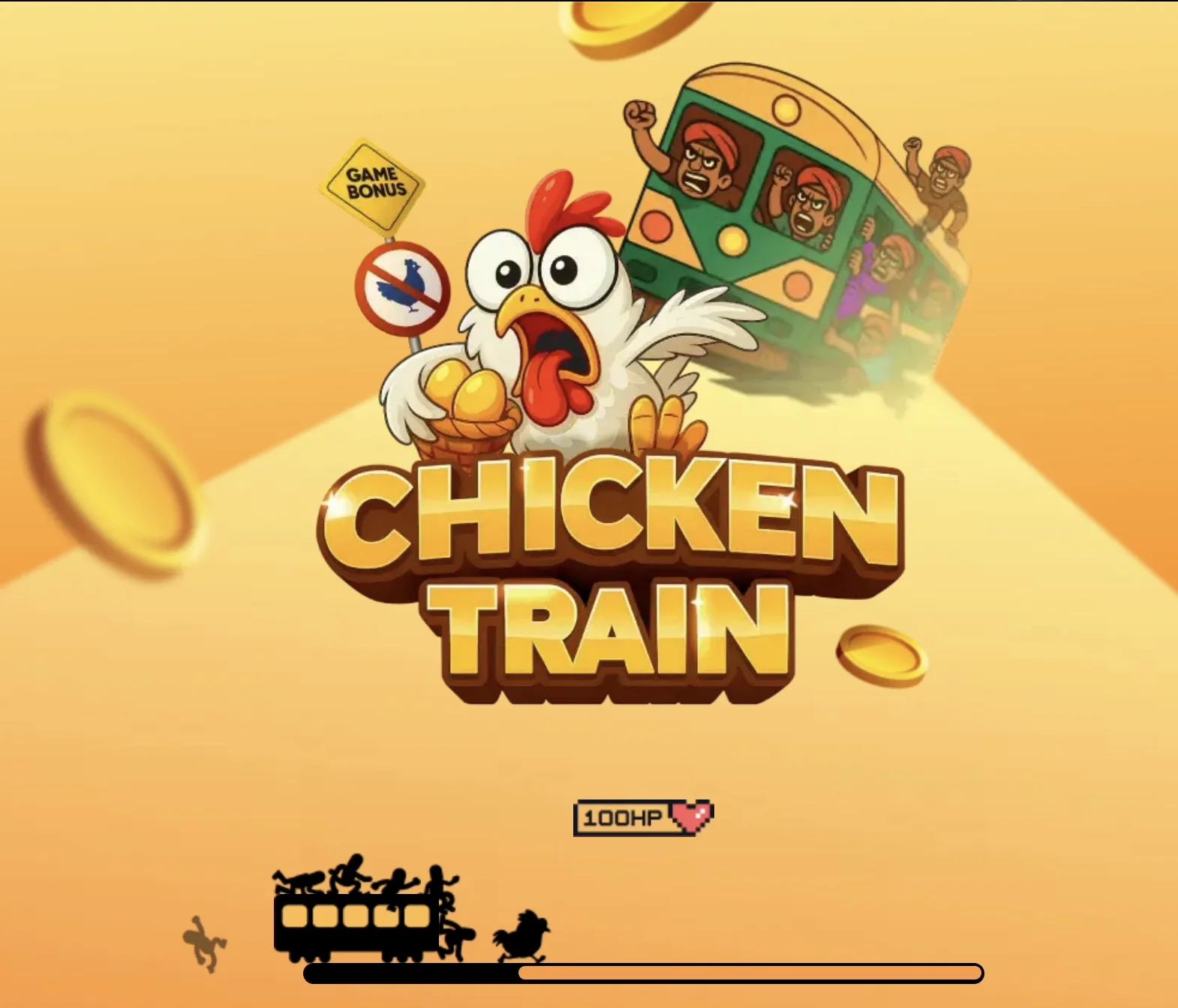
The demo loads directly in your browser — works on desktop, Android, and iOS. I've tested it on Chrome, Safari, and Firefox without any issues. If the game doesn't load on your first try, clear your browser cache or try a different browser. Most loading problems come from ad blockers interfering with the game scripts.
Why You Should Play the Demo Before Wagering Real Money
I've seen too many players jump straight into real-money Chicken Train and burn through their bankroll in minutes because they didn't understand the mechanics. The demo exists for a reason, and here are four specific things it teaches you that reading guides alone cannot.
1. Learn the Core Mechanics by Doing
Chicken Train looks simple on the surface — a chicken walks across railway tracks while you decide when to cash out. But there are nuances that only become obvious when you actually play. The timing of the Withdraw button, how quickly trains approach at different risk levels, and the visual cues that precede a Bonus Run activation — these things need to be felt, not just read about. I spent my first 20 demo rounds just getting comfortable with the rhythm of the game. The step-based progression feels different from continuous crash games like Aviator, and the demo lets you internalize that difference without losing a penny.
If you want a detailed breakdown of every interface element before jumping into the demo, check out my how to play guide — it covers every button, panel, and mechanic with annotated screenshots.
2. Test All Four Risk Levels
Chicken Train offers Low, Medium, High, and Extreme risk levels, and they play completely differently. Low risk gives you frequent small wins with a maximum multiplier of x62.93. Extreme risk is a rollercoaster — rounds end quickly, but the maximum payout reaches x55,833.16. Most players naturally gravitate toward one risk level, and the demo helps you find yours without the financial sting of discovering that Extreme risk burns through your bankroll three times faster than you expected.
During my testing, I ran 50 demo rounds on each risk level and tracked the outcomes. Low risk gave me a positive session 60% of the time with modest returns. Extreme risk produced one incredible 43x multiplier but wiped out my virtual balance in 3 out of 5 sessions. That kind of data is worth knowing before you put real money on the line.
3. Practice Strategies Without Consequences
Whether you're testing the conservative 1.5x auto-cashout approach or experimenting with a mixed strategy across risk levels, the demo is your laboratory. I used it to test every strategy I eventually wrote about in my strategies guide — and several of them looked great on paper but fell apart when I actually played them. The demo showed me that my "aggressive Medium risk" approach had losing streaks of 8-12 rounds that I hadn't anticipated mathematically. That discovery saved me real money.
The auto-cashout feature works identically in demo mode, so you can test exact multiplier targets and see how they perform over 20, 50, or 100 rounds. Set a virtual bankroll limit for yourself and track whether your strategy keeps you above water.
4. Zero Financial Risk While You Build Confidence
This is the most obvious benefit, but it's worth stating clearly: the demo costs nothing. You can make every mistake in the book — forgetting to set auto-cashout, accidentally playing on the wrong risk level, panic-cashing at 1.01x — and the only thing you lose is virtual currency that resets anyway. I genuinely believe that 30 minutes in the demo will save most players at least $20-50 in avoidable early losses when they switch to real money.
There's no shame in spending a few hours in demo mode. I still go back to the demo when testing new approaches or when a game update changes something. Responsible gaming starts with understanding what you're playing, and the demo is the safest way to get that understanding.
Demo Mode vs. Real Money — Side-by-Side Comparison
Players often ask me whether the demo is "the same game" or a watered-down version. Here's the honest breakdown of what's identical and what's different.
| Feature | Free Demo | Real Money |
|---|---|---|
| Financial Risk | None — virtual currency only | Real money at stake ($0.10–$150 per round) |
| Winnings | Virtual only — cannot be withdrawn | Real cash — withdrawable to your account |
| RTP | 97% (identical engine) | 97% |
| Registration Required | No — play instantly | Yes — account and deposit needed |
| Gameplay Experience | All features: 4 risk levels, Bonus Run, auto-cashout | All features: 4 risk levels, Bonus Run, auto-cashout |
| Emotional Intensity | Lower — virtual stakes reduce tension | Higher — real money increases adrenaline and stress |
| Provably Fair | Same hash-based system | Same hash-based system |
| Bonus Eligibility | No casino bonuses apply | Welcome bonuses and promotions available |
The one thing I want to flag honestly: the emotional experience is different. When you're playing with virtual currency, a 10-round losing streak feels like nothing. When it's real money, that same streak can trigger panic decisions — chasing losses, switching to Extreme risk impulsively, or doubling your bet size. The demo teaches mechanics perfectly, but it can't fully prepare you for the psychological pressure of real-money play. Keep that in mind when you make the transition.
If you're considering signing up at a casino to play for real money, I've compiled the best bonus offers available right now — some include free spins or deposit matches that extend your real-money bankroll.
How to Use the Demo Effectively (Not Just Click Randomly)
Most players open the demo, click around for five minutes, and then switch to real money thinking they've learned everything. That's a mistake. Here's how I recommend approaching demo play to actually extract useful information.
Set a Virtual Bankroll and Stick to It
Even though the demo gives you unlimited virtual currency, treat it like real money. Decide on a virtual bankroll — say, $100 in demo credits — and play as if that's all you have. This forces you to make the same decisions you'd face with real money: bet sizing, when to walk away from a losing session, and whether to adjust your risk level after a string of losses. If your strategy wipes out your virtual $100, that's critical information. It means the same thing would happen with real money.
Track Your Results Across Sessions
I keep a simple spreadsheet when testing in demo mode: round number, risk level, multiplier achieved, bet size, and profit/loss. After 50 rounds, patterns emerge that you'd never notice otherwise. You might discover that your instinct to cash out early on Medium risk consistently leaves money on the table, or that your "aggressive" Extreme risk sessions always end in the red within 15 rounds. Data beats gut feelings every time.
Test All 4 Risk Levels Systematically
Don't just stick with one risk level in the demo. Play at least 20 rounds on each: Low, Medium, High, and Extreme. Compare your results. Pay attention to how the game feels at each level — the frequency of trains, how far the chicken typically walks, and how often Bonus Run triggers. Most players end up gravitating toward Low or Medium risk for regular play and only use High or Extreme for occasional thrill sessions. The demo helps you figure out your personal comfort zone without trial-and-error costs.
Practice Auto-Cashout at Different Targets
Auto-cashout is the most powerful tool in Chicken Train, and the demo is the perfect place to calibrate it. Try 10 rounds with auto-cashout at 1.3x, then 10 at 1.5x, then 10 at 2.0x, and 10 at 3.0x. Track which target gives you the best balance of win frequency and session profitability. On Low risk, I found that 1.5x hit about 70% of the time in my testing, while 3.0x only hit around 35%. That's the kind of insight the demo provides for free, and it directly informs your real-money strategy.
When to Switch from Demo to Real Money
There's no rush. Seriously. The demo isn't going anywhere, and the casinos will still be there tomorrow. But if you're thinking about making the transition, here are the four checkboxes I think every player should tick first.
You're Comfortable with the Mechanics
Can you explain how Chicken Train works to someone who's never seen it? Do you know what Bonus Run does, when it triggers, and what the golden egg represents? If you can answer these questions confidently, you've learned enough from the demo to understand what's happening in each round. If any of these feel unclear, spend more time in the demo or review my how to play guide.
You've Tested a Strategy and Trust It
Going into real-money play without a plan is the fastest way to lose your bankroll. Your strategy doesn't need to be complex — "Low risk, $1 bets, auto-cashout at 1.5x, stop after losing $20" is a perfectly valid plan. The key is that you've tested it in the demo and seen how it performs over at least 50 rounds. You should know roughly how often you'll win, what your average session looks like, and what the worst-case scenario feels like. My strategies page has several tested approaches you can try.
You've Set an Entertainment Budget
This is the responsible gaming checkpoint, and I take it seriously. Before you deposit a single dollar, decide on an amount that you're genuinely comfortable losing completely. Not "comfortable" as in "I'll be annoyed but fine" — I mean truly okay with it disappearing. For most people starting out, that's $10-20. If losing $20 would cause you financial stress, the demo is still the better option. There's nothing wrong with playing the demo indefinitely — it's the same game, and entertainment doesn't require real money.
You've Selected a Reputable Casino
Not all casinos offering Chicken Train are created equal. You want one with a valid license, proven withdrawal track record, and responsive support. I've reviewed the major options in my registration guide, including which casinos offer the smoothest signup process and best deposit bonuses for Chicken Train players. Don't rush this step — picking the wrong casino can ruin an otherwise solid gaming experience.
Important: Gambling should always be entertainment, never a way to make money. The 97% RTP means the house wins 3% over time — no strategy changes that mathematical reality. If you find yourself chasing losses, increasing bets beyond your comfort zone, or gambling with money you can't afford to lose, stop and contact BeGambleAware or GamCare for support.
Content Update History
- — Verified demo availability across all partner casinos, updated game screenshots, added auto-cashout practice tips
- — Added comparison table, expanded "When to Switch" section with responsible gaming guidance
- — Initial publication with demo access, 4 reasons to play demo, and FAQ
Frequently Asked Questions
Yes, completely free. The demo uses virtual currency that has no cash value. You don't need to enter payment details, provide identification, or make any kind of deposit. The game loads directly in your browser and you can start playing within seconds. If your virtual balance runs out, it resets automatically.
No registration is required for demo play. You can access the free demo instantly without providing an email address, phone number, or any personal information. Registration is only necessary when you decide to play with real money. This is one of the biggest advantages of the demo — you can try the game with zero commitment.
The core gameplay is identical. Same game engine, same 97% RTP, same 4 risk levels (Low, Medium, High, Extreme), same Bonus Run mechanic, same multiplier ranges. The only difference is that demo mode uses virtual currency instead of real money. You cannot withdraw demo winnings, and casino bonuses don't apply to demo play. But mechanically, you're playing the exact same game.
Yes. All four risk levels are fully available in the demo: Low (max x62.93), Medium (max x267.56), High (max x10,308.99), and Extreme (max x55,833.16). Train frequencies, multiplier progressions, and Bonus Run behavior are identical to real-money play. I'd recommend spending at least 20 rounds on each level to get a real sense of how they differ.
There's no time limit whatsoever. Play for 10 minutes or 10 hours — it's entirely up to you. Your virtual balance resets if it runs out, so you'll never be locked out of the demo. I know players who spent weeks in demo mode before making their first real-money bet, and that's a perfectly reasonable approach.
Not at all. Demo mode and real-money mode are completely separate systems. Your demo results, virtual balance, and play history have no connection to any real-money account. You won't earn loyalty points or progress toward bonuses in demo mode, but you also won't lose anything. The two modes exist independently.
Yes. The Chicken Train demo runs in any modern mobile browser — Chrome on Android, Safari on iOS, or Firefox. It's HTML5-based, so no app download is required. The interface adapts to smaller screens automatically. If you prefer a native app experience, check out my download guide for installing Chicken Train as a PWA on your home screen.
Sources
- Chicken Train demo mode tested across 3 partner casino platforms — screenshots and gameplay data collected March 2026
- Risk level statistics based on 200+ demo rounds per risk level, tracked manually with session logging
- Auto-cashout hit rates derived from 100-round sample sets at 1.3x, 1.5x, 2.0x, and 3.0x targets on Low risk
- RTP verification confirmed via in-game provably fair panel and cross-referenced with developer documentation