
Chicken Train Casino: 5 Checks Before the First Paid Round
Use this checklist before opening the cashier so you can locate the controls and verify train timing, Bonus Run conditions and operator terms first.
1. Game Availability
Confirm the casino lobby lists Chicken Train in your region and lets you open demo mode before registration or deposit.
2. RTP and Limits
Check RTP, min bet, max bet, payout cap, and currency rules inside the live game panel instead of trusting cached figures.
3. Bonus Run Rules
Read when Bonus Run can trigger, how it interacts with risk levels, and whether the operator explains the mechanic in the help panel.
4. Fairness Panel
After a demo round, find the Salt/Hash or round-history verification screen so you know what proof is available after paid rounds.
5. Mobile Cashout
Test the withdraw button on your phone. A small button or laggy animation can matter when trains approach and the multiplier is moving.
Chicken Train: Game Overview
The repository captures show a chicken, railway tracks, trains, a multiplier egg and a Withdraw control in a crash-style interface. Check the active rules for step progression, train outcomes, settlement, RTP, bet range and payout cap before depositing.
Chicken Train stands out because it pairs a familiar crash-game idea with selectable risk levels and a Bonus Run mechanic. That means the useful reading path is rules first, demo second, bankroll plan third.
The goal of this page is not to predict outcomes. It is to help you inspect the game panel, understand how trains and cashout timing work, and spot operator-side limits before money is involved.
The game may offer Salt/Hash fairness details on supported casino platforms. Treat that as a panel to verify after a round, not as a blanket promise from any affiliate page.[1]
| Parameter | Value |
|---|---|
| Game Name | Chicken Train |
| Game Type | Crash (step-based) |
| RTP | Check the current game rules before depositing |
| House Edge | Derived from the live RTP shown by the operator |
| Volatility | Selectable (Low / Medium / High / Extreme) |
| Min Bet | Casino and currency specific |
| Max Bet | Casino, account, and bonus specific |
| Max Payout | Confirm in the live game panel |
| Fairness Check | Salt/Hash panel where supported by the casino |
| Special Features | Captured Bonus Run theme and 4 risk labels; verify auto-cashout availability |
| Platform | Check supported browser or official operator app by region |
How Chicken Train Works
The screenshots provide a useful visual map: the chicken and trains occupy the railway play area, the golden egg carries a multiplier value, and Withdraw identifies the cashout control. The active help panel—not a still image—defines movement, progression, settlement and train outcomes.
Use this captured-interface walkthrough to locate the main controls:
Place Your Bet
Enter a stake allowed by your casino account and start the round. Use the /2 and x2 quick buttons only after checking minimum, maximum, and bonus max-bet rules.
Chicken Starts Moving
The chicken appears on the tracks, and the captured interface uses a golden egg to show the current multiplier. Confirm the live progression in the active game.
Dodge or Cash Out
Locate the train graphics, multiplier display and Withdraw control shown in the capture. Before using Withdraw, confirm when it becomes active and how cashout and train outcomes are settled.
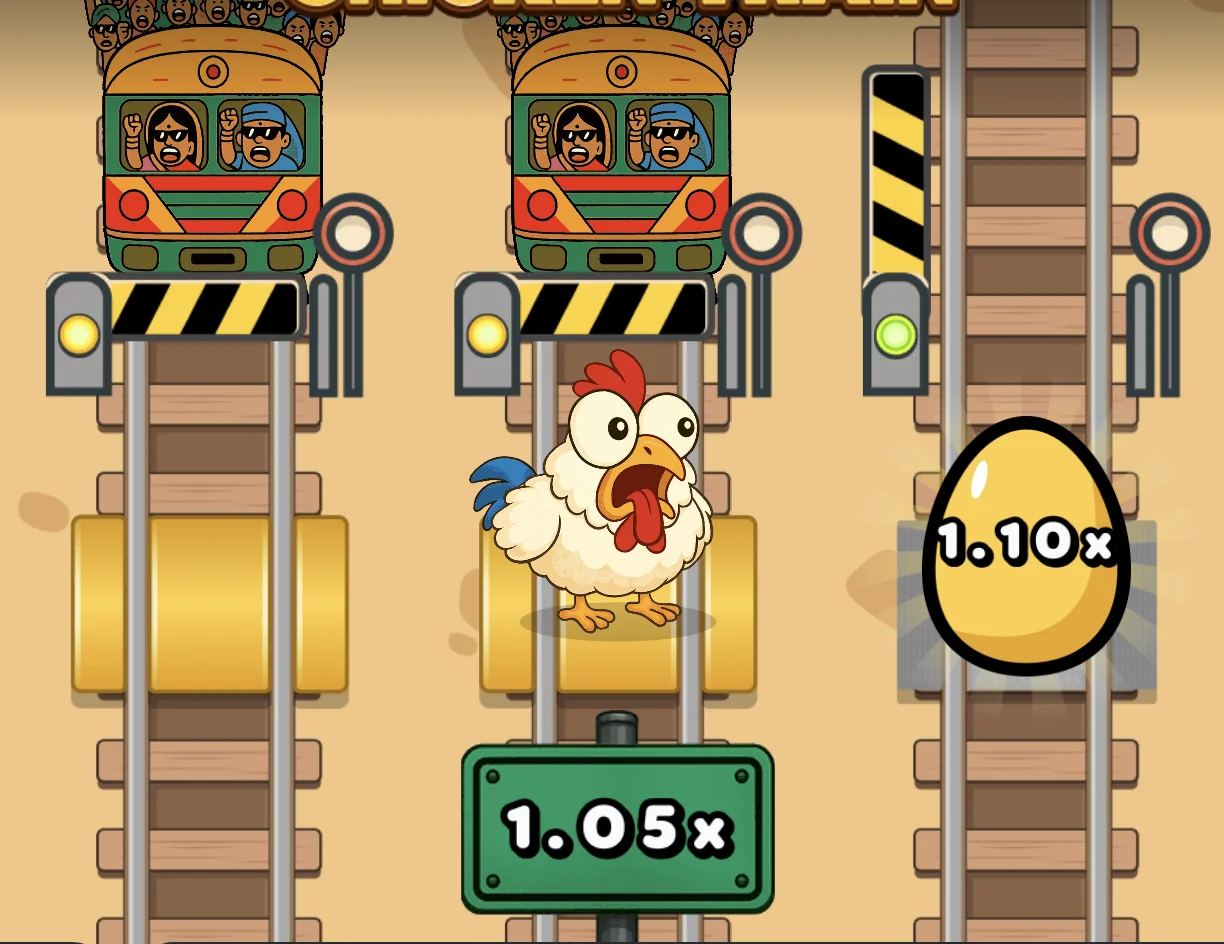
The interface screenshots show the golden egg as the multiplier display and "Withdraw" as the cashout control. Before paid play on mobile, use demo mode to check that the control size and response are comfortable on your own screen.
For the visible controls, risk levels and demo checks in order, read how to play Chicken Train step by step.
Risk Levels Explained
The captured selector shows Low, Medium, High and Extreme labels. Use the active help panel to learn when a selection can be changed and how each label affects multiplier ceilings and outcome behavior.
| Risk Level | Displayed Ceiling | Frequency Evidence | Useful Demo Check |
|---|---|---|---|
| Low | Check panel | Not established by captures | Compare labels and controls |
| Medium | Check panel | Not established by captures | Compare displayed progression |
| High | Check panel | Not established by captures | Review loss-limit settings |
| Extreme | Check panel | Not established by captures | Verify ceiling and payout cap |

If demo mode is available, compare what the selector and multiplier display show for each label without estimating frequency from a short run. If a risk label makes you change stake size after a loss, pause instead of trying to recover.
The Chicken Train strategy guide covers bankroll sizing, risk selection, and safer exit rules for each tier.
Game Stats at a Glance
Provably Fair: How It Works
Chicken Train may expose a cryptographic fairness panel. If one is present, determine when the hash, Salt, seed or round details appear and compare them only through the operator's documented flow.
Here's the verification process to look for:
Click the shield icon in game results
If the current result screen shows a shield or verification control, open it and note which round-result fields are actually provided.
Copy the Salt cipher
If the operator provides Salt, seed or hash data, copy only the value named in its current verification instructions.
Paste into the Hash field
Follow the operator's documented verification service and field mapping. A visual checkmark alone is not enough unless the rules explain what was compared.

Use the fairness panel as a transparency check, not as a reason to raise stakes. Verification explains a past round; it does not predict the next train or remove the house edge.
Where to Play Chicken Train
Chicken Train availability and bonus rules can differ by operator. Compare these casino options by game access, wagering terms, payment rules, and withdrawal conditions before you deposit:

1Win Casino
Confirm Chicken Train availability, wagering contribution, KYC steps, withdrawal limits, and payment fees before depositing.

Fresh Casino
Use demo mode first, then verify whether crash games count toward wagering and whether withdrawal timing changes after KYC.

LuckyStar Casino
Look for Chicken Train in the live lobby and confirm cashback, wagering, max-bet, and excluded-game rules before relying on a promo.
For a complete comparison of casino bonuses, wagering requirements, and promo codes, see the Chicken Train bonuses page.
Chicken Train Screenshots & Interface
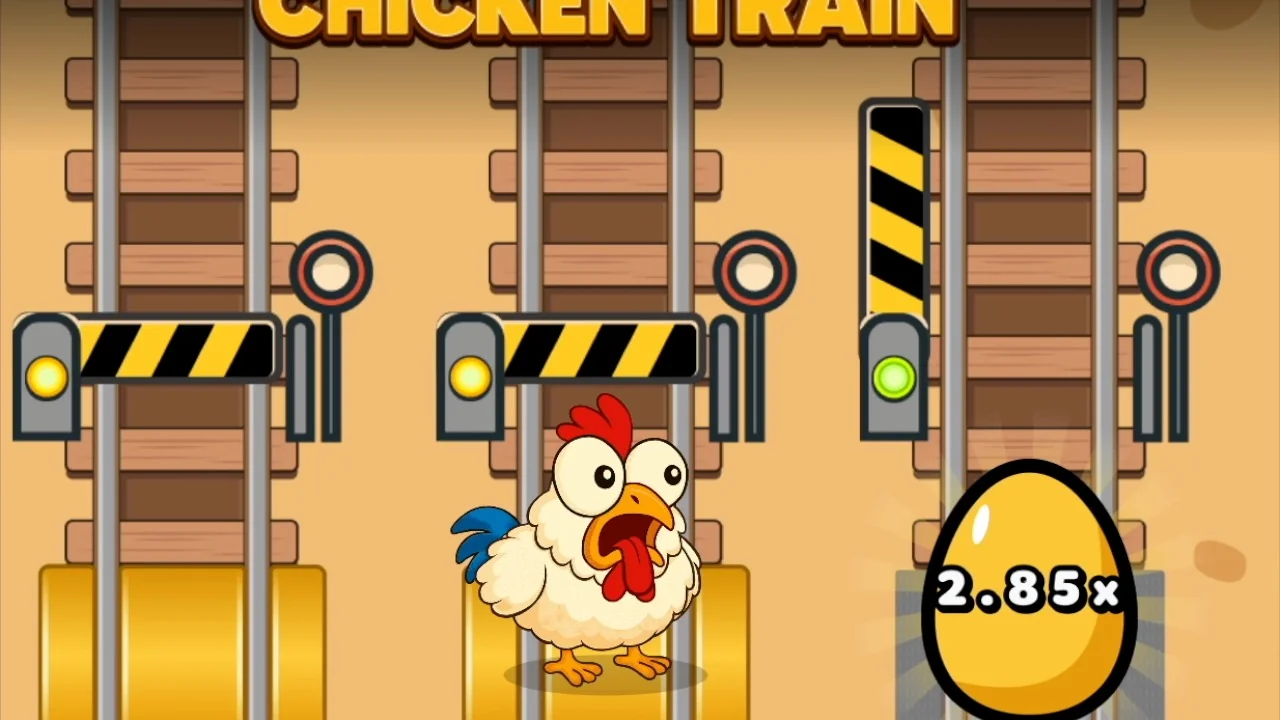
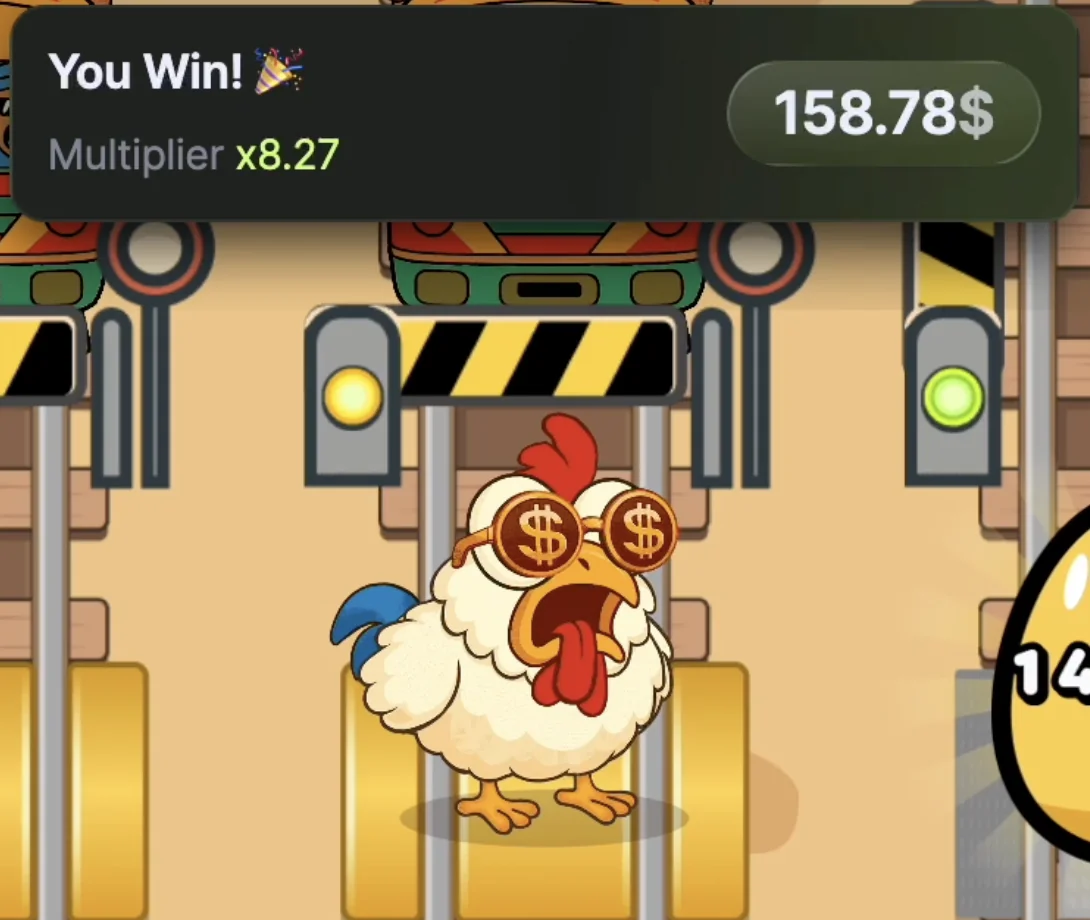
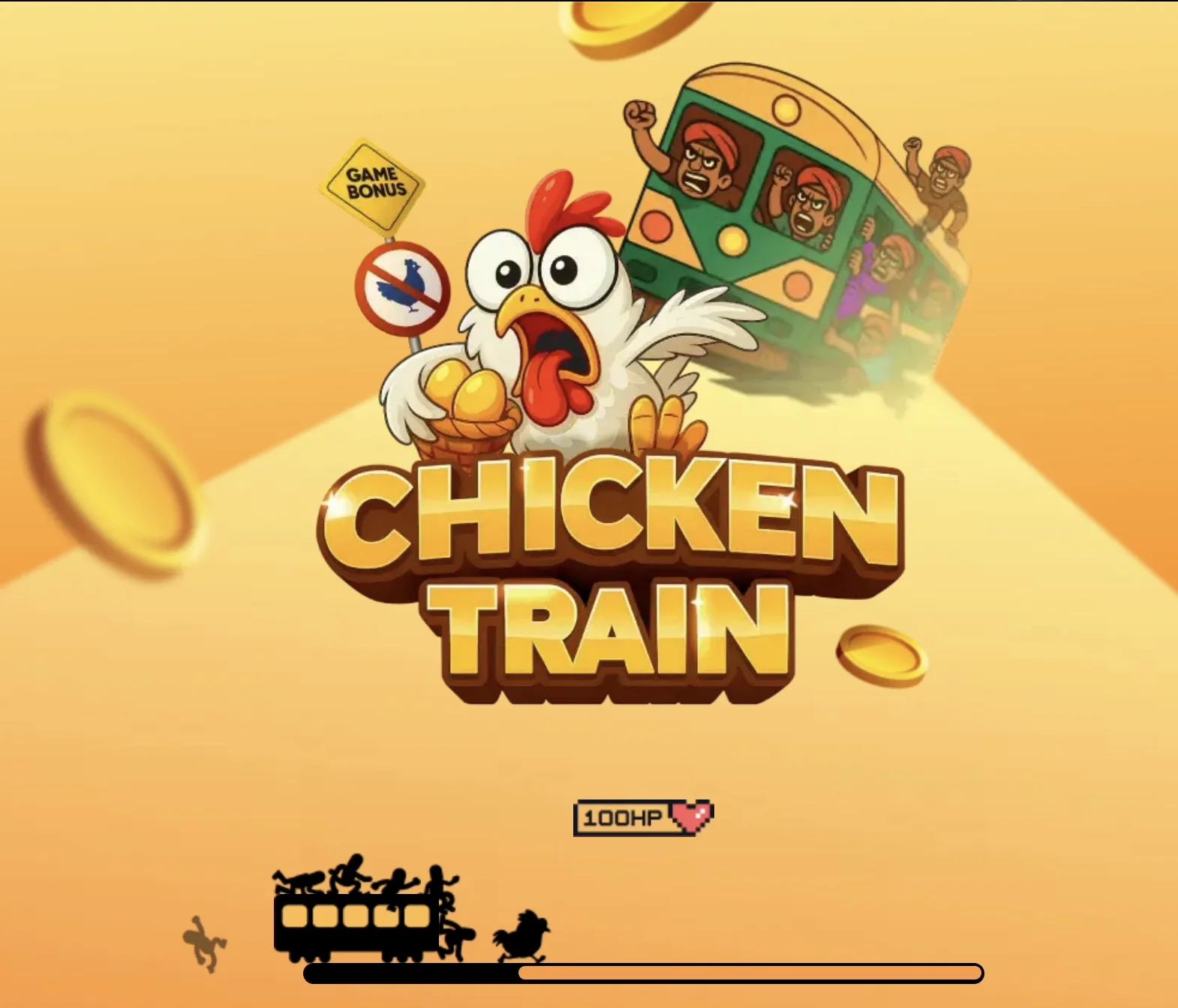
These interface screenshots show the controls, trains, multiplier display, Bonus Run theme, and cashout flow players should recognize before paid play.


Chicken Train — Who Is This Game For?
Best For:
- Players who want to compare four captured risk labels before choosing a setting
- Crash game fans looking for a visual twist on the standard rising-multiplier format
- Anyone who wants to check fairness tools after a round
- Low-budget players who confirm the current minimum stake first
- Mobile players prepared to verify a supported browser or official operator app
Not For:
- Players who require free spins or bonus buys unless those features appear in the current rules
- High rollers who have not confirmed the current maximum payout
- Those who prefer traditional slot machines with reels
- Players who dislike step-based games (prefer continuous multiplier growth like Aviator)
Chicken Train review checks
This Chicken Train guide separates railway risk levels, RTP notes, demo practice and bankroll warnings from casino offer language. That makes the page useful before a visitor reaches the partner exit.
Before depositing, confirm that the operator hosts Chicken Train in your region, then read bonus wagering, max-bet limits, payment timing and withdrawal checks. Operator terms control the account outcome.
Verdict: Chicken Train Gets 4.3 out of 5

Chicken Train is a readable crash game with two checks that matter most before paid play: how the operator handles risk levels and how clearly it explains Bonus Run. RTP, fairness tools, payout caps, and mobile cashout controls should all be verified in the current casino panel.
Interface strengths
- Captured Low, Medium, High and Extreme labels make the risk selector easy to locate
- Fairness panel gives players a round-checking path where the operator supports it
- Bonus Run has a distinct visual theme, with conditions left to the current help panel
- Operator-provided demo mode can help identify controls before staking
- RTP and limits can be checked in the current game panel before depositing
What needs improvement
- Payout caps must be checked in the current operator rules
- Mobile control size and responsiveness should be checked on the intended screen
- Auto-bet availability and repeat behavior must be checked by operator
- Versioned provider and rules information should be confirmed before paid play
If available, start with the free demo to locate the risk and cashout controls, then compare its rules with the paid build. The strategies page provides bankroll-management prompts for use with verified inputs.
Remember: Chicken Train is entertainment, not income. Any positive house edge favors the casino over time. Set a session budget, stick to it, and never chase losses. If gambling stops being fun, visit our responsible gaming page for help resources.
Content Update History
- - Reworked homepage checks around live casino access, Bonus Run rules, RTP, payout caps, fairness panel, and mobile cashout testing
- - Updated casino bonus notes, RTP references, and risk level comparison
- — Added 2 new casinos (LuckyStar, Fresh) and a Bonus Run checklist
- — Initial publication with interface and rules-panel notes
Frequently Asked Questions
Chicken Train RTP should be checked in the current game info panel. Treat any percentage on a review page as a prompt to verify the live rules, not as a guarantee for your casino account.
A supported operator may expose a Salt/Hash or round-history panel. Check the current rules for what data is provided and how to verify it; the repository does not establish that every build is provably fair.
Repository captures show Low, Medium, High and Extreme labels. Confirm their current multiplier ceilings, outcome behavior, Bonus Run relationship and switching rules in the active help panel.
Minimum bet, maximum bet, and maximum payout are set by the operator and can vary by currency, account status, country, and bonus use. Check the game panel and cashier before paid play.
The interface presents Bonus Run as a multi-step dash. Check the current help panel to confirm its trigger conditions and whether the selected risk level changes its length; do not infer skipped steps from the risk label alone.
Demo availability, access requirements and feature parity depend on the operator and region. If a virtual-balance mode is available, compare its controls and rules with the paid build. Review demo checks here.
Both are crash-style games, but the mechanics differ. Aviator uses a continuous rising multiplier curve; Chicken Train uses discrete steps between railway tracks and selectable risk levels. Compare RTP and payout caps inside the current operator rules before choosing either game.
Mobile browser, PWA and app availability depend on the operator, device and region. Test a supported route and the Withdraw control before depositing, and use only an official operator installation option. See the mobile guide.
Sources
- Repository interface capture:
images/interface/chicken-train-gameplay-chicken-dodging-trains.webp - Repository result capture:
images/interface/chicken-train-big-win-multiplier-payout-screen.webp - Rules note, checked 2026-08-26: obtain RTP, bet limits, payout caps, fairness fields and Bonus Run conditions from the active operator panel before paid play
Next Reading
Use the Chicken Train interface guide for the control checklist, the strategy page for bankroll limits, and any operator-provided free demo before a paid round.